
Montana 2026 Tour - From Mountains to Prairies - Field Report
We conducted an exciting tour around the central part of Montana, starting in Bozeman and looping northeast to Malta and then south to Billings. Before heading back to Bozeman, we hopped over the border into Wyoming’s Beartooth Mountains. With both eastern and western songbirds, prairie specialists, montane birds, and some amazing nesting shorebirds, it made for a fantastic itinerary!
Day 1
The trip started off with a bang with our first stop in a county park near Bozeman where Chip and Sam had found a pair of Gray Partridges the day before. It didn’t take long before Sam spied the pair of this elusive, introduced game bird species in the grassy edge of the parking lot. We enjoyed great looks at them when they came out into more open areas to forage on grass seeds. From there we headed to Indreland Audubon Wetland Preserve where we fawned over baby American Coots hanging out in and around their nest, Yellow-headed Blackbirds, Pied-billed Grebes, and a Belted Kingfisher.
We then headed up into Bridger Range where we were treated to looks at many species of finches including Pine Siskin, Evening Grosbeak, Red Crossbill, and Cassin’s Finch. We had great looks at Western Warbling Vireo, Lincoln’s Sparrow, and MacGillivray’s Warbler. While we ate our picnic at a campground, a Mountain Chickadee brought food back to its nest box.
The drive out of the mountains and into the prairie was a gorgeous one and as we drove we spotted Mountain Bluebird, Golden Eagles, Sandhill Crane, and a young black bear! Eventually we came to Old Gap Road where our prairie birding really kicked off. As we drove slowly and got out to admire the birds of the vast open country, we spotted both Thick-billed and Chestnut-collared Longspurs flying around and displaying. Lark Buntings, Long-billed Curlews, and Horned Larks abounded along the road. We also scanned through numerous Savannah and Vesper Sparrows in search of the elusive Baird’s Sparrow with no luck. A very obliging Ferruginous Hawk perched low on a fence post was the perfect highlight to end a wonderfully diverse first day
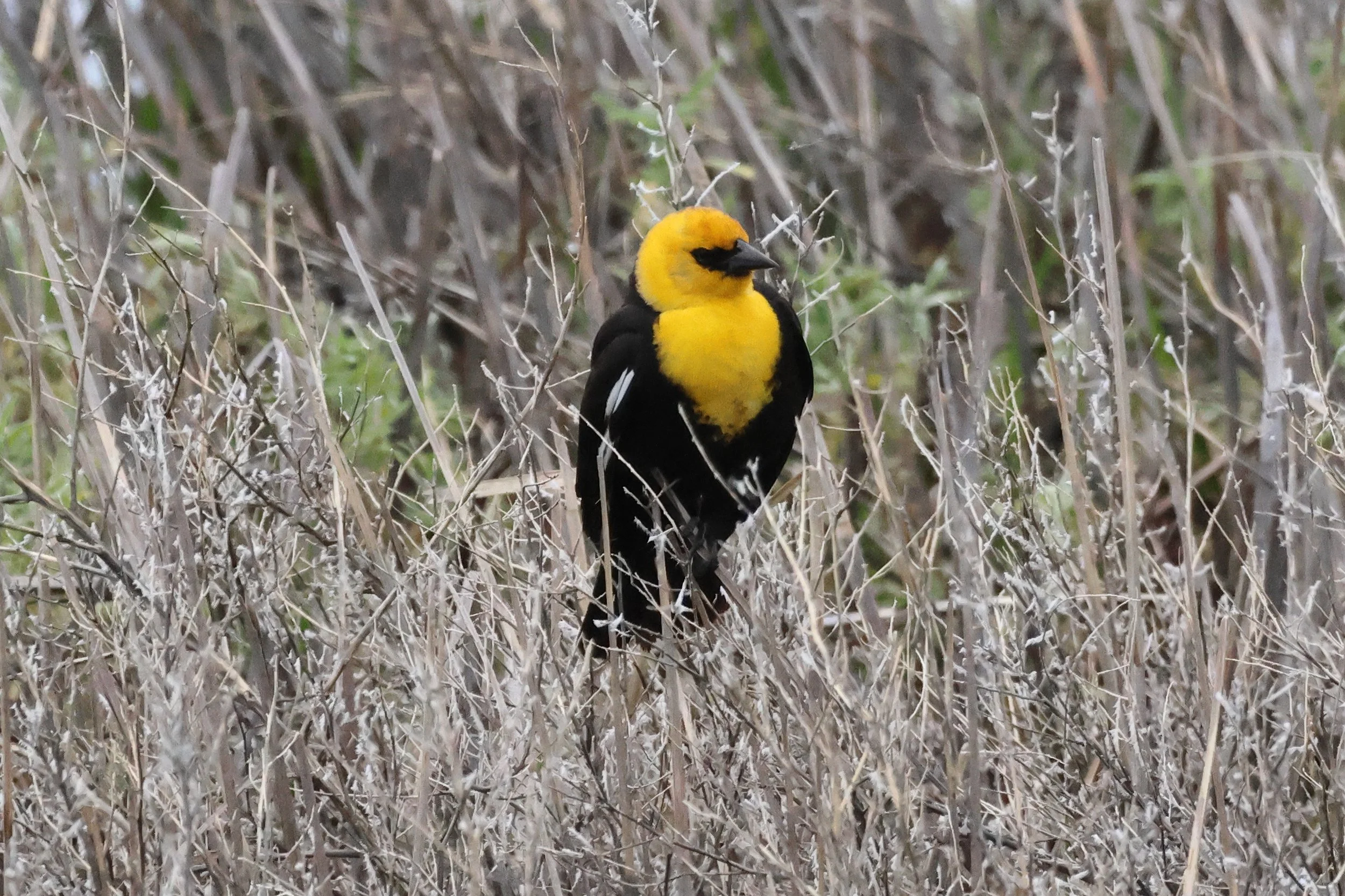
Yellow-headed Blackbird
Day 2
After spending the night in Lewiston, we started heading north. On our drive to the Missouri River Breaks, we spotted Sandhill Cranes and many grassland birds including Western Meadowlark and Bobolink. Eventually, trees started to fill in the landscape and we came to the dramatic hills and bluffs surrounding the Missouri River. Cottonwoods lined the river and on one branch, a Common Nighthawk roosted, allowing extended viewing. Other highlights included an intergrade Northern Flicker, Spotted Towhee, and unbelievable views of a Yellow-breasted Chat. The riparian area also housed some “eastern” birds including Red-eyed Vireo, Ovenbird, Eastern Warbling Vireo, and Least Flycatcher.
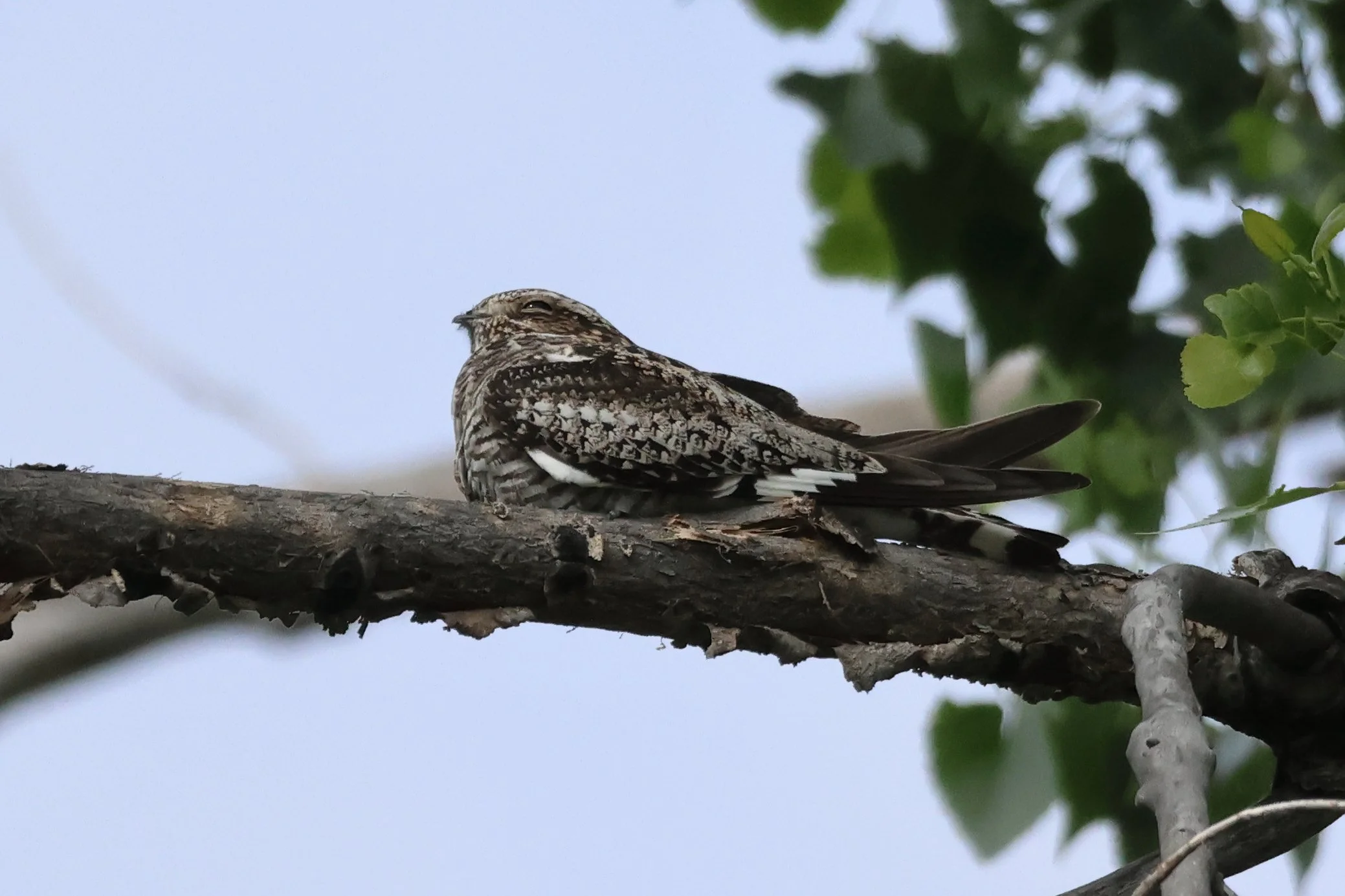
Common Nighthawk
Our next stop, Lake Seventeen Road, was a path lined with prairie dog towns. The grasslands hosted many nesting shorebirds including Western Willets, Long-billed Curlews, and Marbled Godwits that gave us unforgettable views. While we enjoyed the territorial behavior of the godwits, Chip noticed that a Sprague’s Pipit was displaying overhead! These little songbirds are known for their impressive flights over the open prairie where they sing far above the ground for many many minutes on end! While the experience for us was largely auditory, we did get a glimpse of the bird as a small speck against the sky!
After a short stop in the town of Hays for ice cream, we headed north. As we explored more roadside prairie in search of Mountain Plover, we admired Chestnut-collared Longspurs, Horned Larks, and Bobolinks. Eventually we came to a pull-off where we scanned the vast landscape and, between the prairie dog mounds, Sam spotted a lone Mountain Plover. Success! With another difficult prairie nester checked off, we headed to the town of Malta. Along the drive a Wilson’s Snipe flew over the road and we stopped at a roadside pond to admire a large group of Canvasback and Redhead.
Once in the Malta area, we checked out the visitor center at Bowdoin NWR where Franklin’s Gulls flew over and Ring-necked Pheasants called from the brush. We were now in the range of a few more “eastern” songbirds and we added Brown Thrasher and Baltimore Oriole to our list.
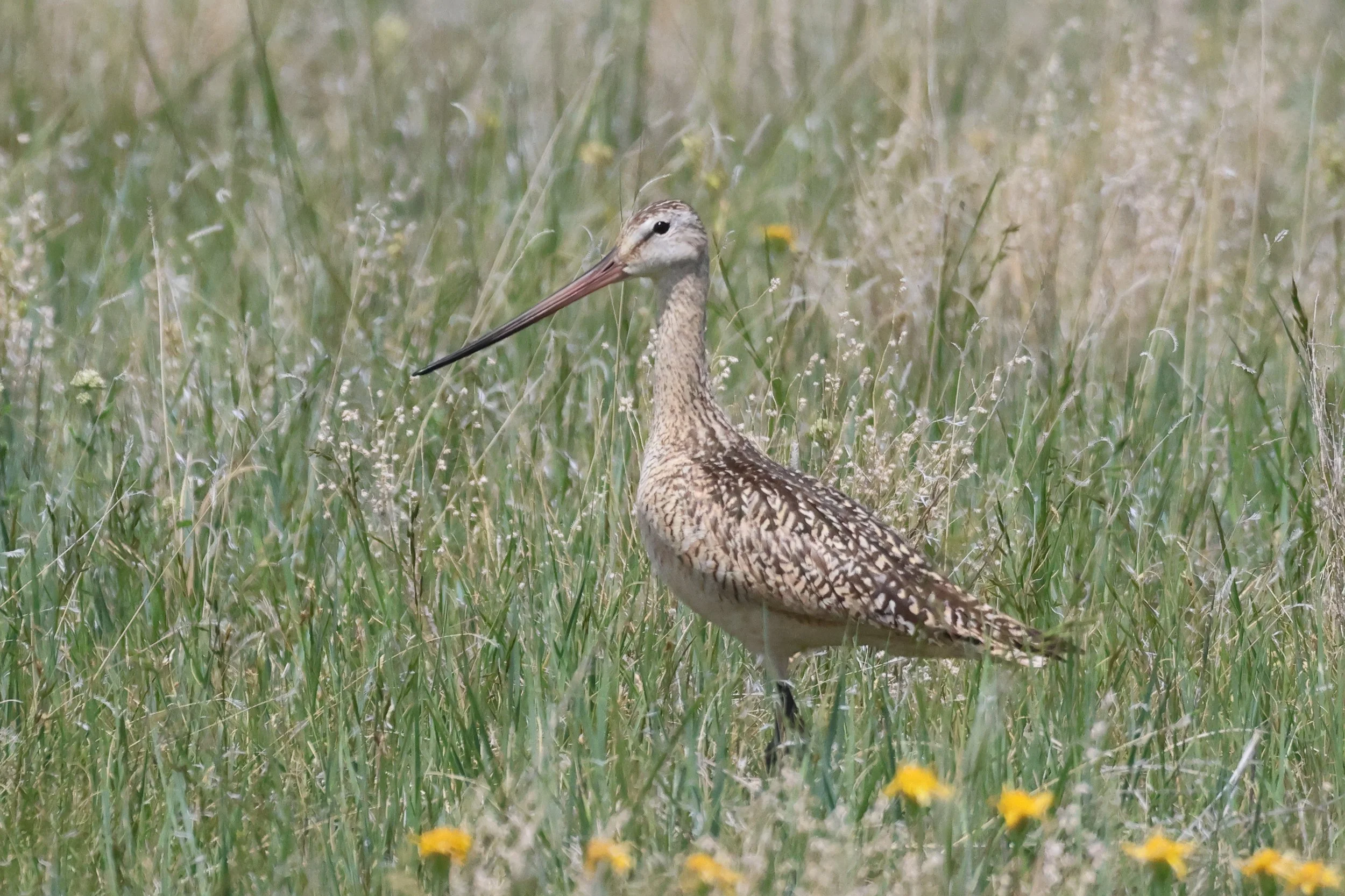
Marbled Godwit
Day 3
With a storm looming in the forecast, we got out to Bowdoin NWR early in the morning. Being the first vehicle on the auto loop paid off when a Sharp-tailed Grouse came into view on the road ahead of us. It strolled along the road and, as we continued, a chorus of Grasshopper Sparrow songs trickled out from the surrounding grasslands. We made some haste to get to the far side of Bowdoin Lake where we got on a trail for a rare chance to take a walk through some native prairie. Lark Buntings and Chestnut-collared Longspurs displayed over the vast area and an Upland Sandpiper flew over! When we had left behind the invasive grasses, we finally heard the unique song of a Baird’s Sparrow. With only a few occasional songs, we searched hard for the bird until Sam managed to get it in the scope. We walked slightly further and heard another Baird’s singing closer and more frequently, but never managed to lay eyes on it.
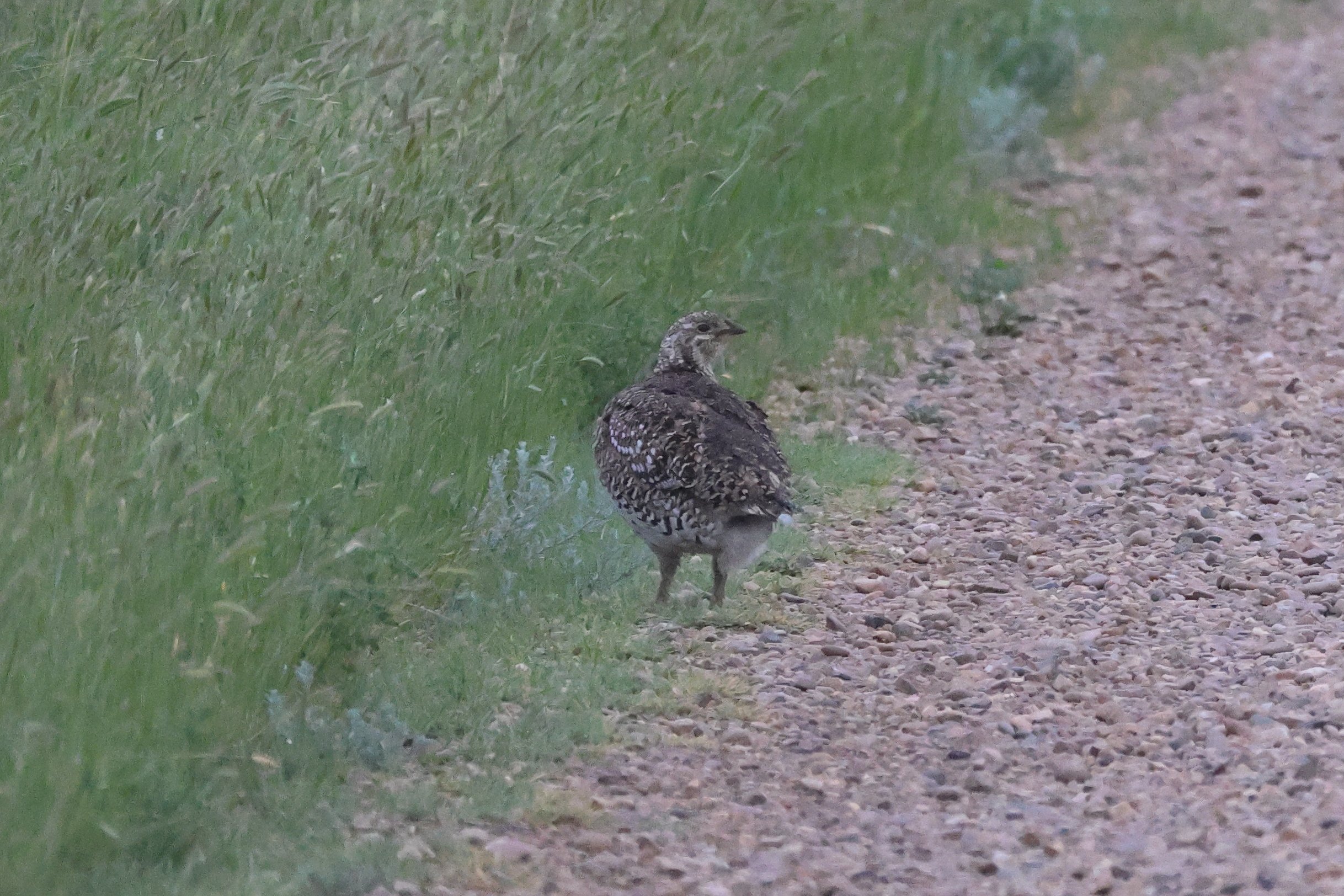
Sharp-tailed Grouse
Back at the van we ate a picnic breakfast while listening to the buzzy songs of Clay-colored Sparrows and admiring a large colony of American White Pelicans. The rest of the drive around the refuge provided opportunities to admire numerous Wilson’s Phalaropes, Black-necked Stilts, and American Avocets. Waterfowl was also abundant and included Cinnamon, Blue-winged, and Green-winged Teals, Northern Pintail, American Wigeon, and Gadwall. The water levels were low, but Yellow-headed Blackbirds still sang away in the marshes and Cliff Swallows swarmed around the bridges under which they built their nesting colonies. A group of a half dozen distant Eared Grebes ended up being a unique sighting for the trip.
After such a productive morning birding the many habitats of the large wildlife refuge, we had lunch back in the cozy cabins at Sleeping Buffalo Hot Springs resort. The property was also amazing for birding and we heard Orchard Orioles singing and spotted Common Nighthawks flying over and calling. During some afternoon thunderstorms, we took some well-deserved down time in the cabins before going over to Nelson Reservoir. Our main species of interest was Piping Plover, and we did indeed spot one way in the distance thanks to Chip’s keen eye. A couple of Common Loons also were at home in the reservoir and a close fly-by of a Forster’s and then a Common Tern provided a nice comparison of the two similar species.
With the rain and thunder returning, we went into Malta for dinner early. The night before we had a wonderful time chatting with the locals at the Stockman Bar and Grill so we returned again and soaked in the true small town Montana charm.
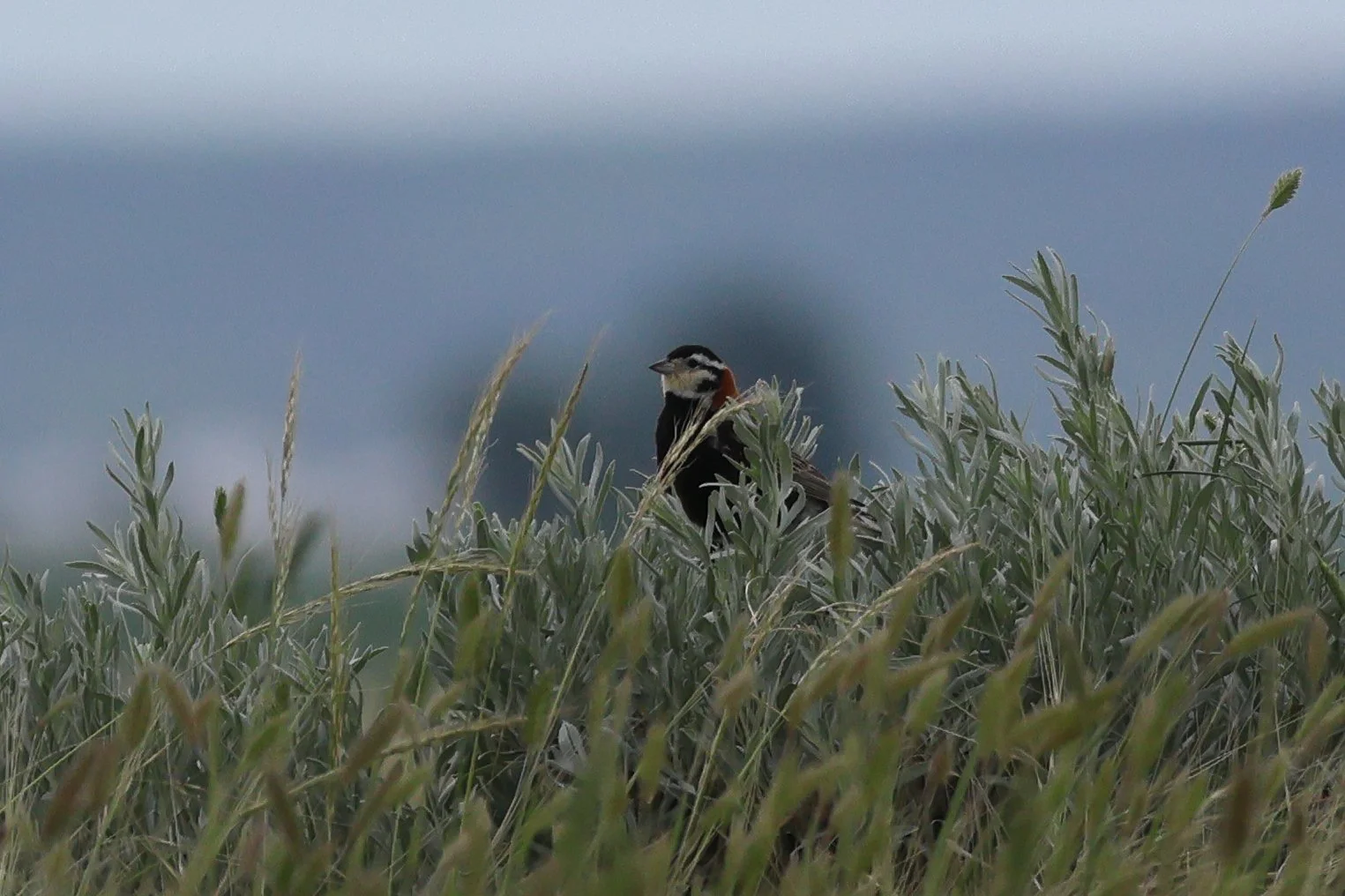
Chestnut-collared Longspur
Day 4
Our day started with a lovely photo opportunity of some baby Ferruginous Hawks in a nest that we had found the previous evening. The fluffy chicks heralded in the next part of our adventure as we headed south. We stopped at a couple of roads to get some more prairie birding in. It was windy, but one road provided us with views of Burrowing Owls in a big prairie dog colony and eventually, a showing of a bunch of Greater Sage-Grouse working their way through relatively shorter sage close to the road where we could see them well!
We also returned to the Upper Missouri River Breaks where the high winds made the Charles M. Russell NWR Auto Tour tricky to bird, but easy to admire with its stunning views of the landscape. Lunch in the riparian area yielded us with more stunning looks at Western Wood-Pewee and we finally got eyes on a Red-eyed Vireo. Further south on our way to Billings, we entered Petroleum County which is very under-birded. We felt the noble calling to rectify this so we pulled over and ended up finding a lovely grouping of birds in a riparian area near some farm fields. Jim spotted yet another roosting Common Nighthawk and we had stunning views of a Lazuli Bunting!
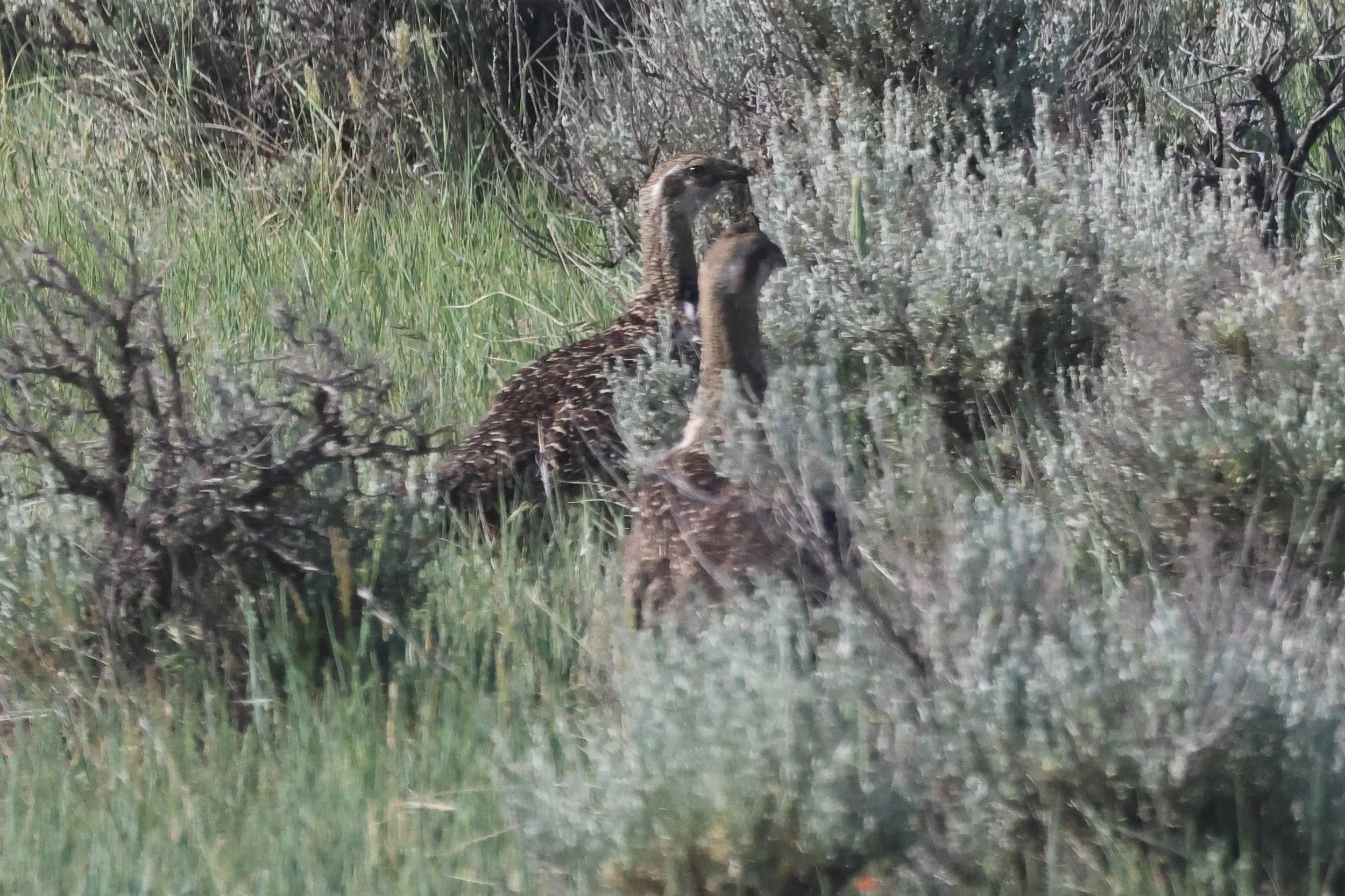
Greater Sage-Grouse
After some more progress going south, we made a foray onto Old Divide Road which is one of the rare places in southern Montana where Cassin’s Kingbirds nest. It wasn’t long before we located some and had stunning views of them perched out in the open. Most of the area we covered on this trip is in range for both Western and Eastern Kingbirds, so this was our third kingbird species! The road’s unique habitat made for more fun sightings including flyover Red Crossbills, several Lark Sparrows, a stunning view of an adult male Bullock’s Oriole, and our first Wild Turkey of the trip! After this amazing spot, we made a beeline for Billings where we ate and rested for the next day’s adventure.
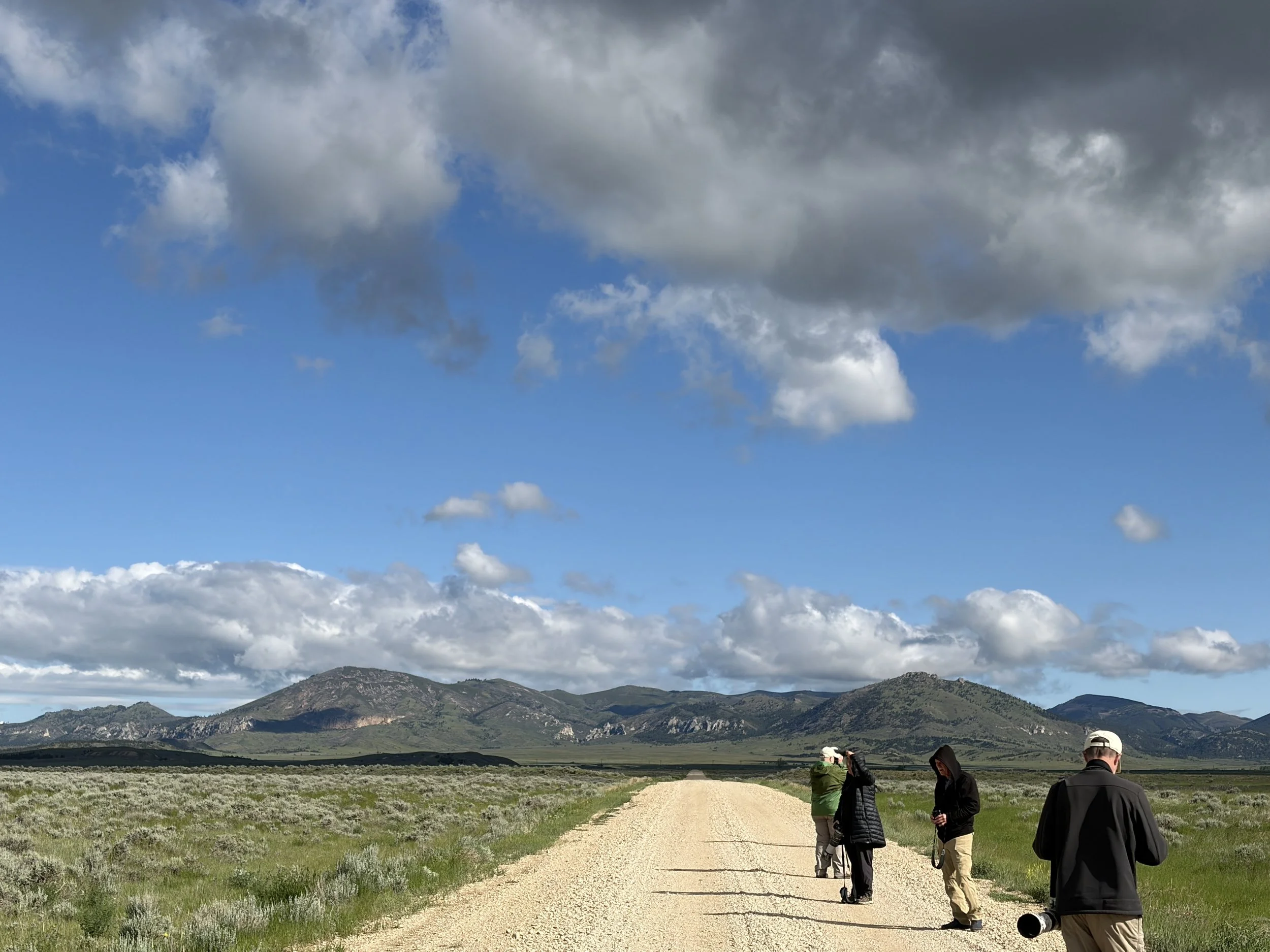
Birding the Prairie
Day 5
We headed south from Billings and towards the Beartooth Mountains. On our way we birded along a back road in the foothills called Brophy Road. With a longshot chance of seeing Dusky Grouse, we didn’t see exactly what we were looking for, but the open area and riparian zone provided some good looks at a variety of birds from Northern Harrier and Mountain Bluebird to Bullock’s Oriole and Spotted Towhee. After that it wasn’t long before we were ascending along the Beartooth Highway.
While soaking in the stunning views all around us, we switchbacked up to elevation. Our first pull-off was to admire the vista, but we also heard Dark-eyed Junco, Hermit Thrush, and Mountain Chickadee. The next pull-off had a packed parking lot with a food truck selling nuts and popcorn. The chipmunks and squirrels here were fat with handouts from the tourists, but for us the exciting draw was the family group of Clark’s Nutcrackers that gave us amazing views and even put on a show feeding their young. As we inched our way up above the treeline, the bird diversity dropped but we spotted the few songbirds that made their living on the alpine tundra - Horned Larks and American Pipits.
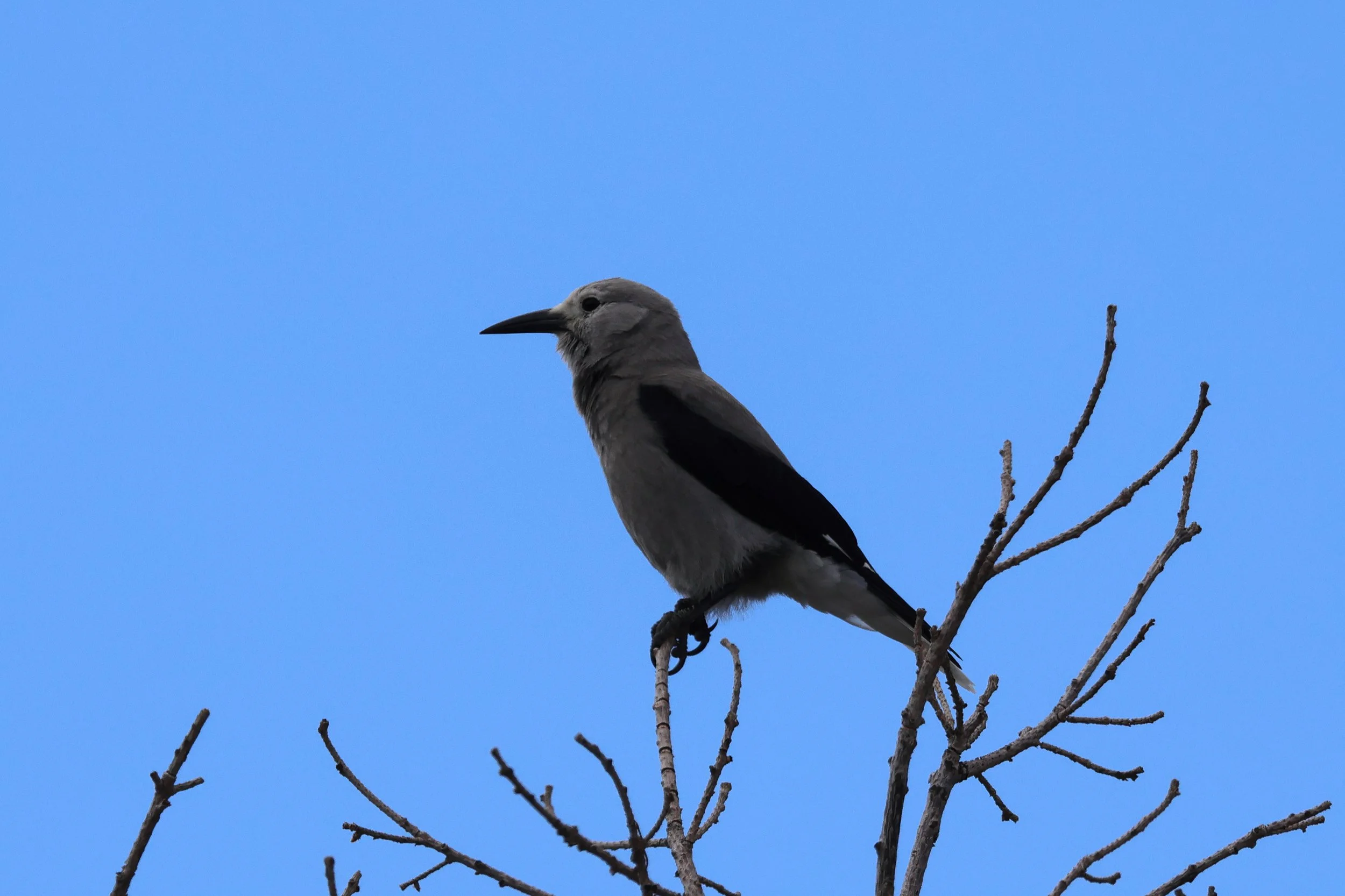
Clark’s Nutcracker
We soon crossed the border into Wyoming as we continued to climb. Stray patches of snow turned into large snow drifts and we spotted a herd of mountain goats and many a yellow-bellied marmot. Our main goal this high up was to see Black Rosy-Finches and after a couple of tantalizing flyovers, we managed, with some marching across the tundra, to get a view of one on the ground, not too far away. Nearby American Pipits displayed over the mountain landscape.
With the morning wrapping up, we headed down the other side of the 10,947 foot high Beartooth Pass and wound our way through stunning alpine landscapes to a recreation area by Island Lake. We ate a picnic lunch in the company of Mountain Bluebirds. After spotting some Common Mergansers on the high-elevation lake, we headed back. With a stop at the summit, it seemed like we would be treated to better looks at Black Rosy-Finch and indeed we were! A pair slowly moved in closer and closer until they were mere feet away from our patient binoculars. We spent a long time watching them feeding and flitting between rocks, snow patches, and tufts of alpine grass.
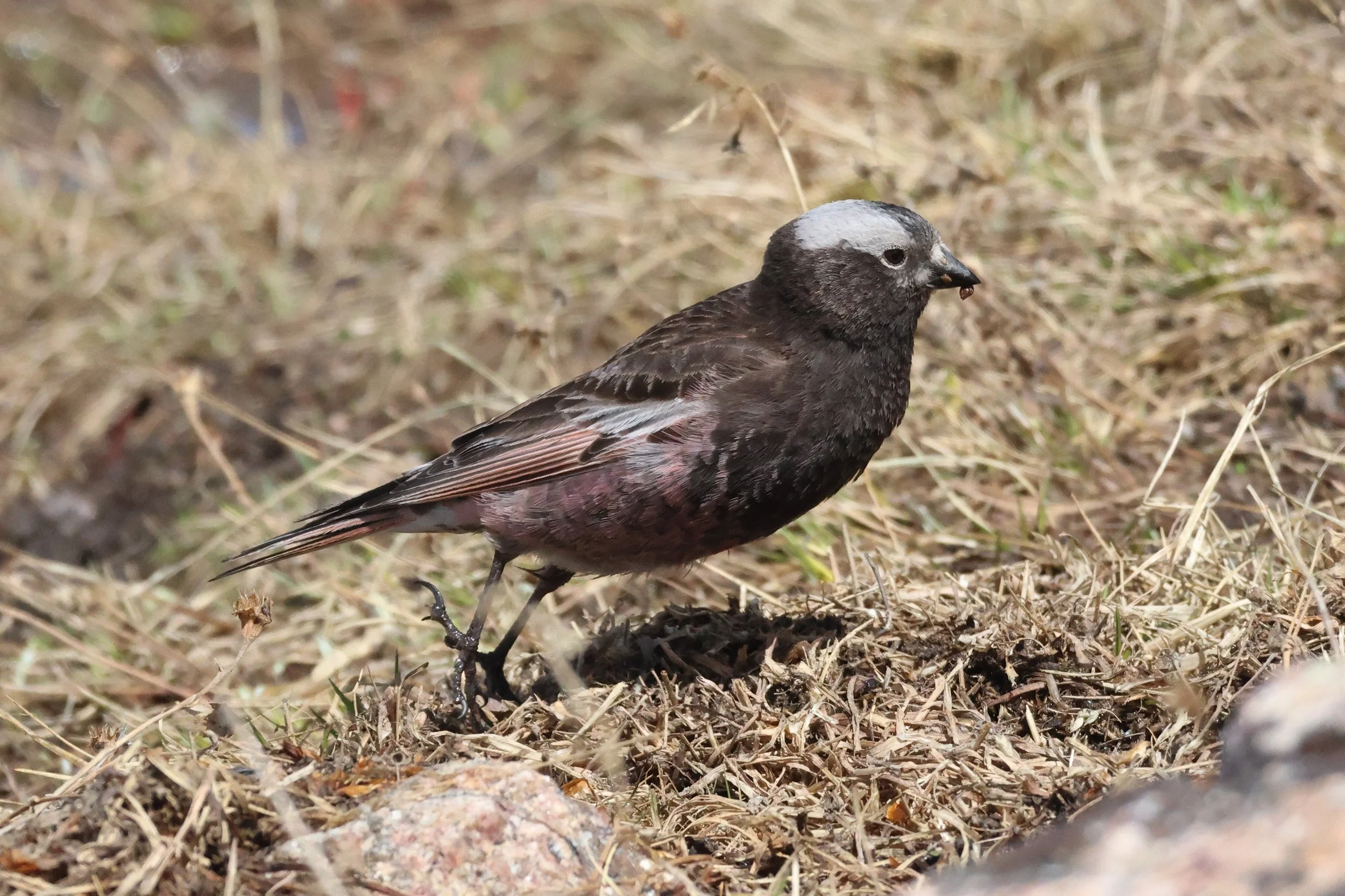
Black Rosy-Finch
Once we were back down low in the town of Red Lodge, we got sandwiches and milkshakes to go and headed for one last birding stop of the day. We were unsuccessful in finding the Pinyon Jays that we were looking for, but we managed to luck out in locating some Rock Wrens, a Say’s Phoebe, and a Loggerhead Shrike! The road was a beautiful mosaic of habitats and we enjoyed the exciting ensemble of western birds that made it their home. After a long and exciting day, we headed back to Billings.
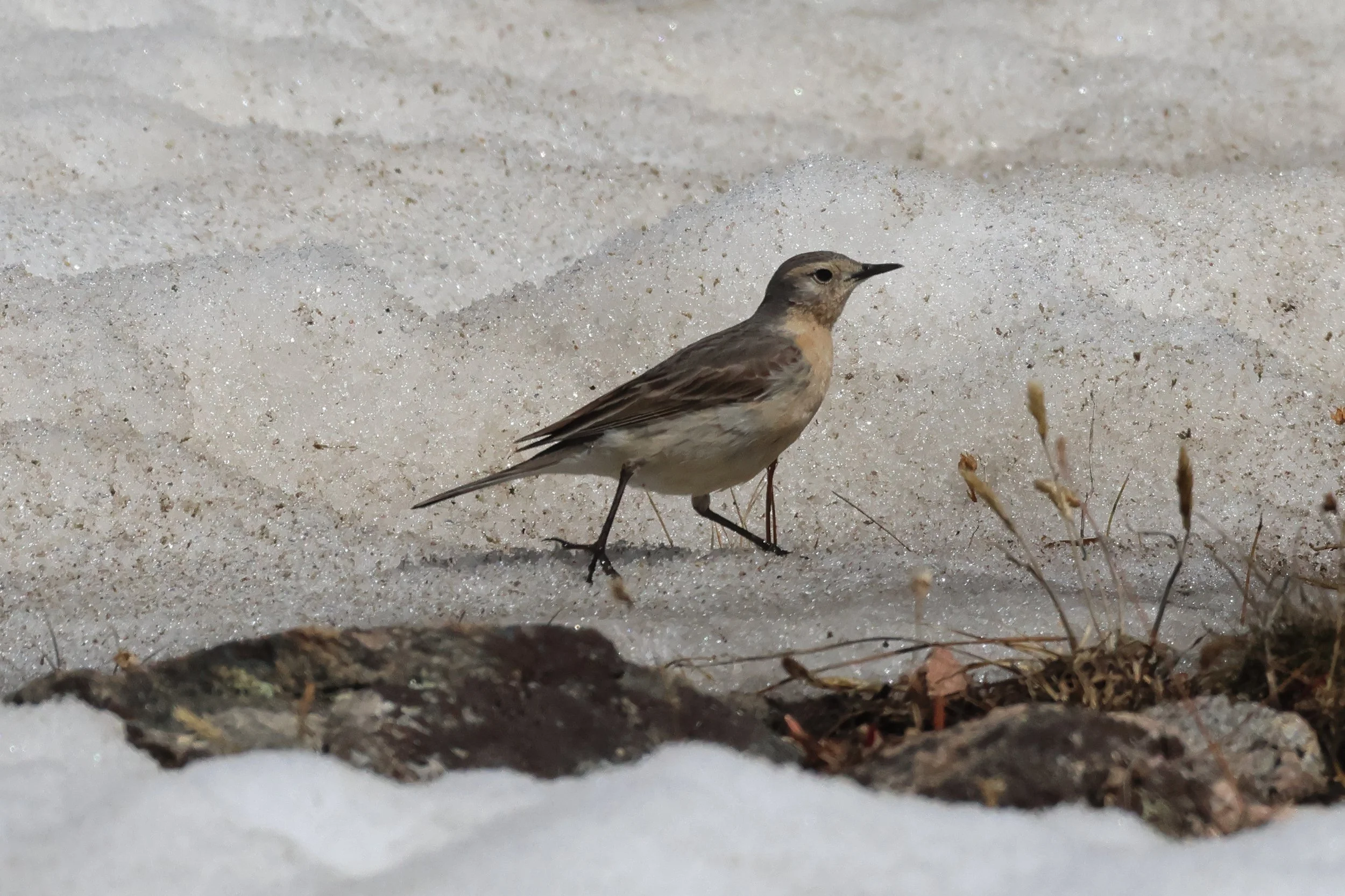
American Pipit
Day 6
On our final full day of the trip, we departed Billings and headed towards Big Lake WMA. On the drive there we had some exciting roadside sightings including Ring-necked Pheasant, Spotted Sandpiper, Wild Turkey, and Sandhill Crane. The grasslands that led up to Big Lake were ultra productive and we spotted Lark Buntings, Chestnut-collared Longspurs, a super cooperative Loggerhead Shrike, multiple Northern Harriers, and both Golden and Bald Eagles. We saw more Grasshopper Sparrows close to the van and we even had the opportunity to park right next to a territorial pair of Upland Sandpipers.
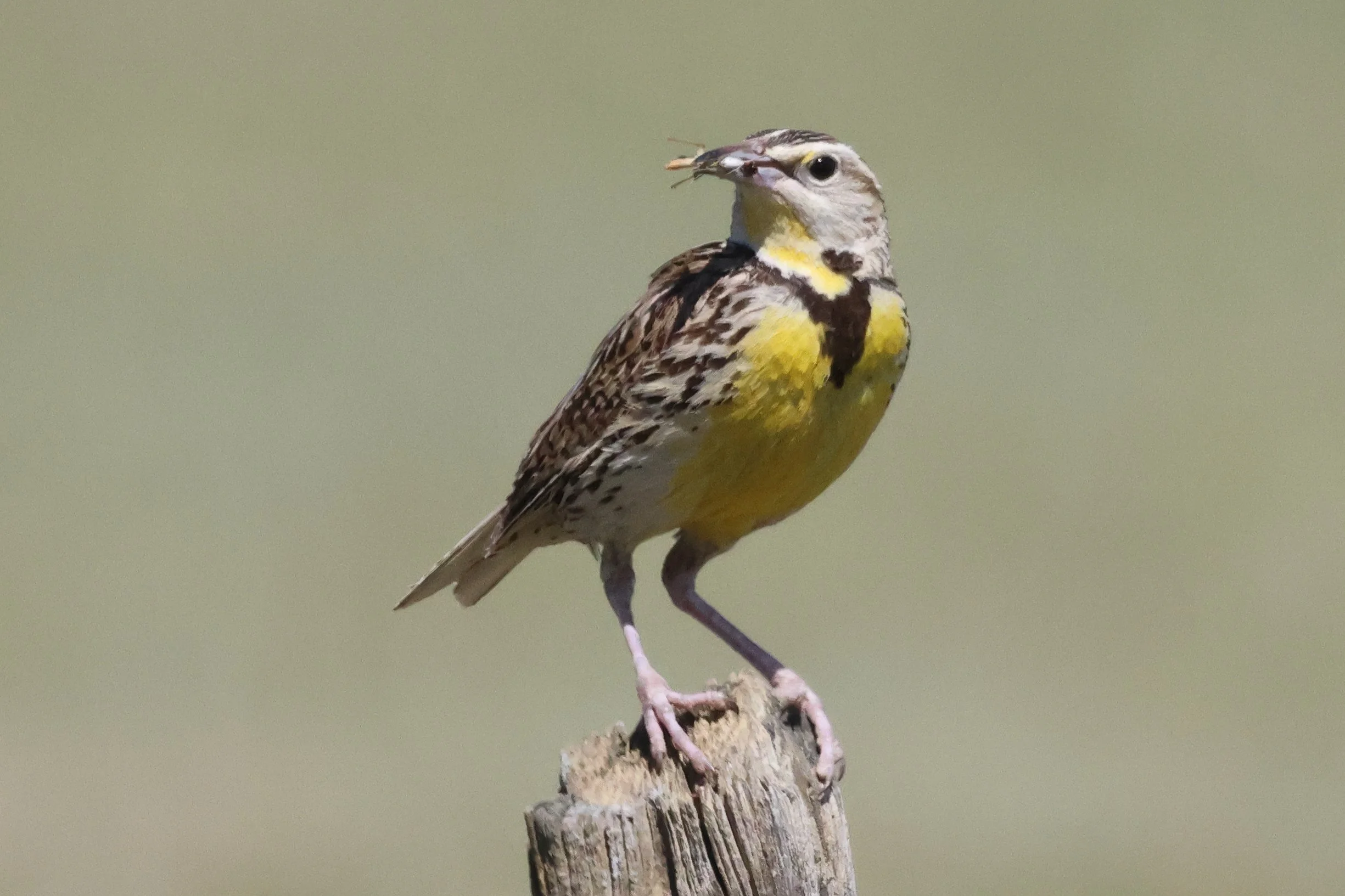
Western Meadowlark
When we got to Big Lake, the water was mostly dried out, but in the distance we could spy Wilson’s Phalaropes, Black-necked Stilts, and American Avocets. A former island was close by and we delighted in watching the numerous American White Pelicans, Double-crested Cormorants, and California Gulls that had created a nesting colony on the little oasis. There were lots of chicks of all three species and the pelican chicks were sticking their heads way down their parent’s throats to be fed. More American White Pelicans soared overhead accompanied by Franklin’s Gulls. On the drive out we found a group of adolescent Long-billed Curlews.
Our next stop that morning was an area on the Yellowstone River where we searched for American Dippers. They weren’t showing, but we were kept occupied by Red-naped Sapsuckers, Cedar Waxwings, Northern Yellow Warblers, and our only White-breasted Nuthatch of the trip! Finally, on one last check of one of the bridges, Sam spotted a dipper that quickly zipped downstream and then landed on the river bank just long enough for us to scope it before it continued on.
We ate lunch at a local diner to refuel before our last birding adventure of our tour. Breaking up our drive back to Bozeman nicely, we ventured down Lower Bridger Creek Road. We observed many species as we drove including Western Wood-Pewee, Lark Sparrow, Spotted Towhee, and Gray Catbird. Near a burnt area, an increase in Northern Flicker density put us on high alert as we searched for the stunning green and red Lewis’s Woodpecker. And there one was! We piled out of the van and spent a long time watching the unique woodpecker as it forged for food to bring back to its nest. With such a wonderful sighting to punctuate our trip, we drove back to Bozeman on a wonderfully high note!
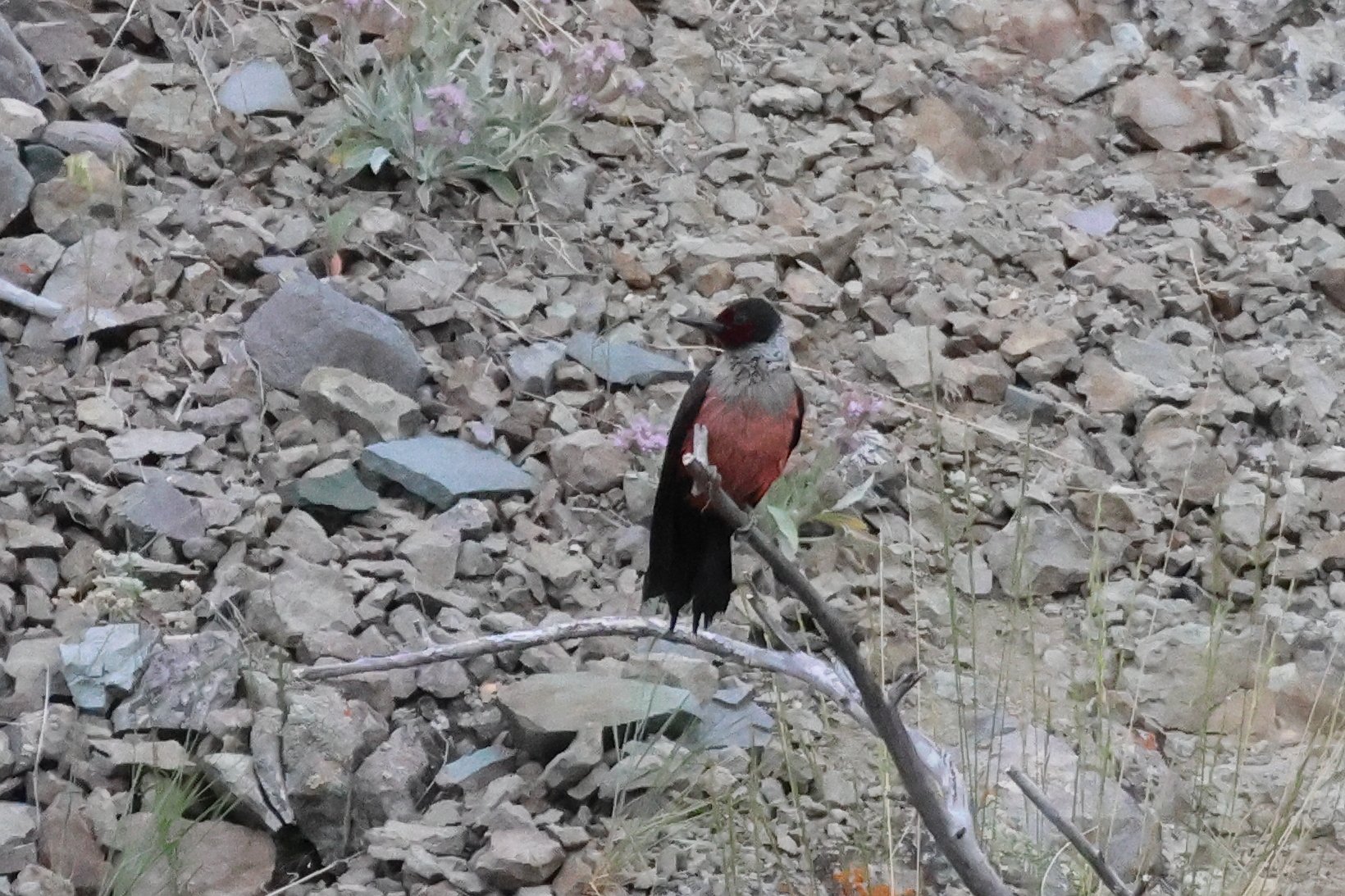
Lewis’s Woodpecker
OR…